
Built For Hot Tires And Dropped Tools
Bonded into ground concrete rather than sitting on top of it, so hot tires, dropped tools and forklift wheels do not chip or peel it.
Eugene · Corvallis · Salem · The Oregon Coast
Polyurea and polyaspartic garage floor coatings, driveways, patios and commercial floors built for wet winters, salt air and real use. We grind the slab down, repair what is broken, and lay a seamless finish that will not chip, peel or yellow.
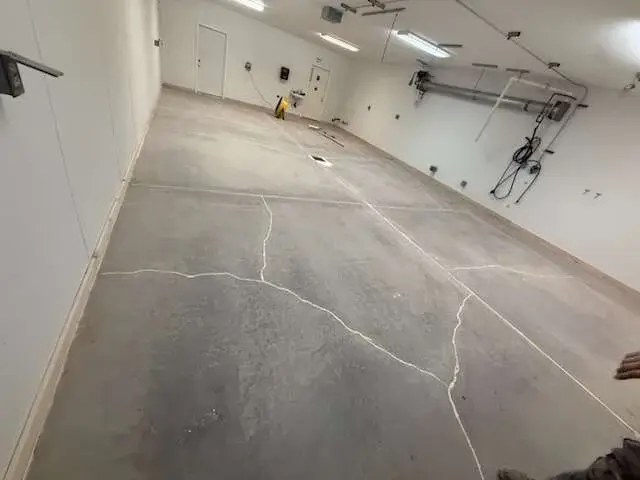 BeforeAfter
Why It Holds Up
Bonded into ground concrete rather than sitting on top of it, so hot tires, dropped tools and forklift wheels do not chip or peel it.
Oil, coolant, road salt and brewery cleaners stay on top of a non-porous surface. Wipe it and it is gone.
The polyaspartic topcoat is UV stable. An open garage door or a south-facing patio does not fade it the way it fades epoxy.
Polyurea stays flexible through Oregon's freeze and thaw, so it rides the concrete's movement instead of cracking away from it.
Why Not Just Epoxy?
Most people search for “epoxy garage floor” because it is the word they know. What we install is a polyurea basecoat with a polyaspartic topcoat. Run the tests and watch the difference.
Stays clear. Will not yellow.
Yellows and chalks within a couple of seasons.
Yellows fast; thin film.
| What matters | Polyurea + polyaspartic (what we install) | Professional epoxy | DIY epoxy kit |
|---|---|---|---|
| UV exposure (open garage door, patio) | Stays clear. Will not yellow. | Yellows and chalks within a couple of seasons. | Yellows fast; thin film. |
| Freeze and thaw movement | Flexible; moves with the slab. | Rigid; cracks and delaminates as the slab moves. | Rigid and thin; lifts at the first crack. |
| Cure and return to service | Walk within 24 hours, vehicles after 48 to 72. | Often a week or more before vehicles. | Days, but the film stays soft. |
| Hot tire pickup | Resists heat transfer; stays bonded. | Softens under hot tires and lifts. | Peels where the tires sit, usually year one. |
| Salt, oil and fuel | Non-porous once cured; wipes clean. | Stains and etches unless re-sealed. | Stains; water-based film soaks. |
| Surface prep | Diamond grind, crack and spall repair. | Grind when done properly. | Acid etch; nothing to bond into. |
Before & After
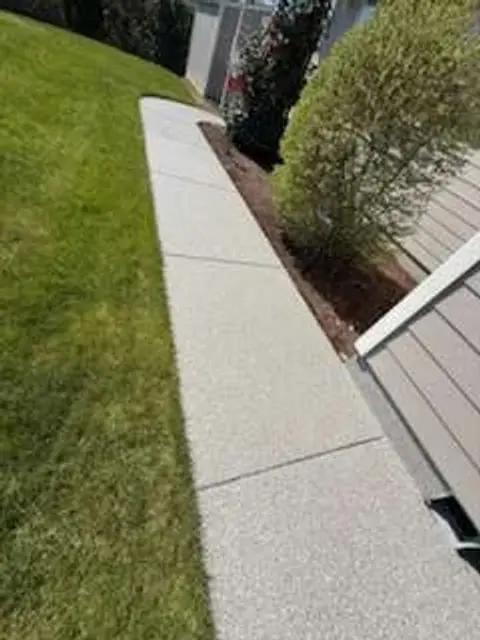
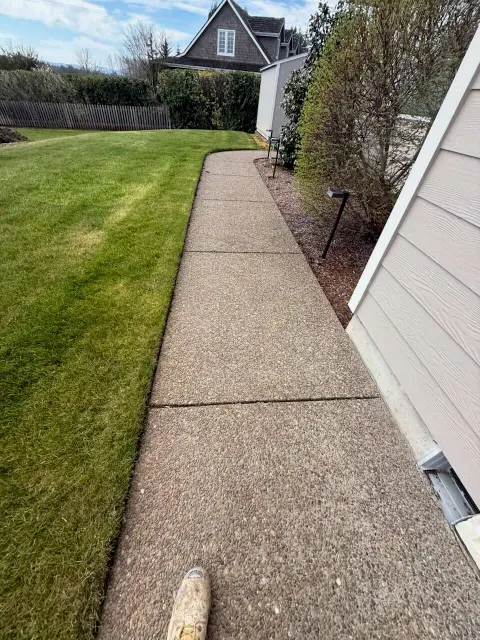
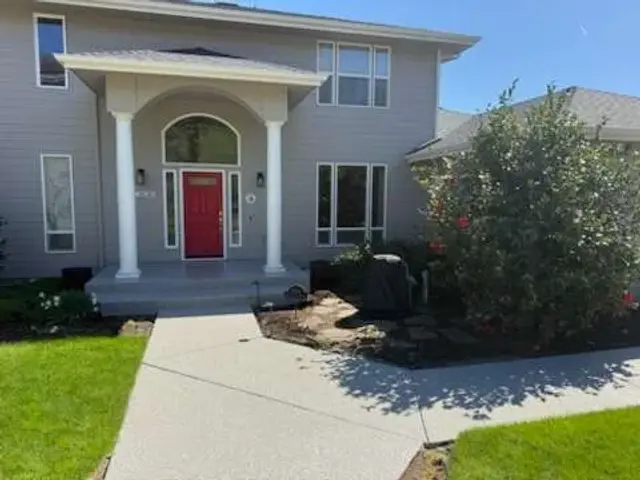
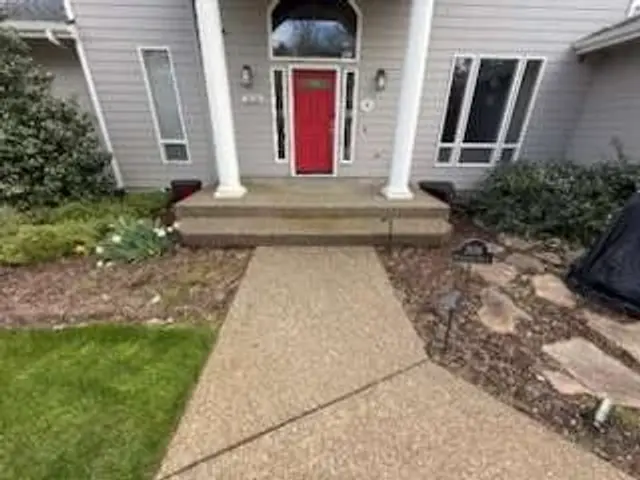
These are our own jobs, not stock photos. A proper grind, crack repair and full flake broadcast is what turns a tired slab into this.
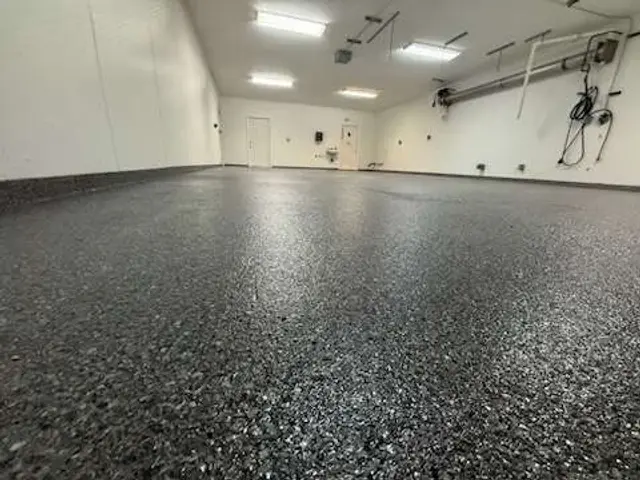
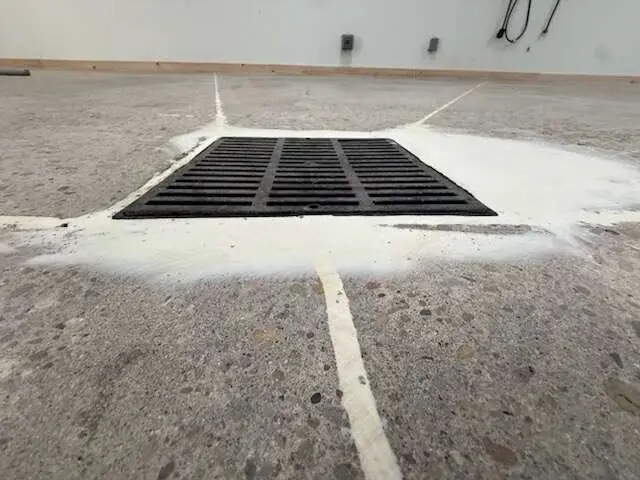
The cracks were chased out, filled and ground flat before anything was coated. Skip that step and every one of those lines telegraphs back through the finish within a season.
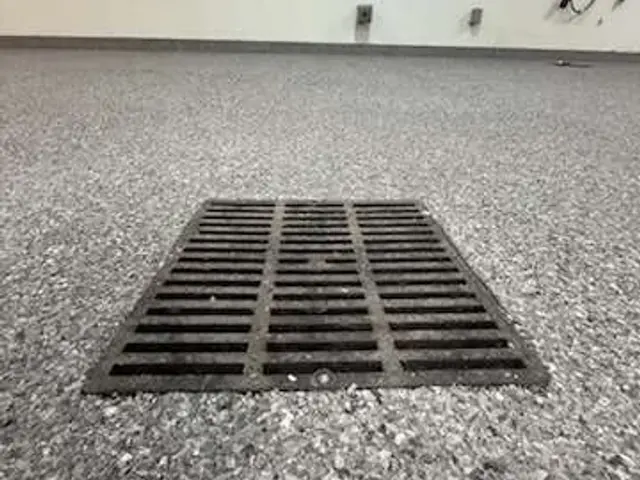
Drains, thresholds and door tracks are where cheap coating jobs come apart first. The edge gets terminated properly so water has nowhere to creep underneath.
Colors & Finishes
Eight chip blends named for the country we work in. Try them on a floor right here, then we bring physical samples to your quote so you are choosing in your own light, not on a screen.
Charcoal base with black, gunmetal and silver chip. The default for garages and shops, and the easiest color to keep looking clean.
Screen colors are a guide drawn from each blend's description. Physical samples come to every quote.
Install Day
The same four steps on every job, garage or warehouse. The prep is most of the work and the only reason the coating lasts.
Diamond grind to open concrete. Cut out and fill cracks and spalls, re-grind flat, vacuum dust-free.
Rolled wet and even, worked into the pores, edges and terminations done by hand.
Chip thrown to refusal into the wet base, then scraped and vacuumed once cured.
Flooded over the flake to lock it down. Walk on it within 24 hours; vehicles after 48 to 72.
What We Coat
Garages are the bread and butter, but a good share of our work is the concrete everyone sees first: the walk to your front door, the steps, the driveway.
Garage FloorsThe flagship. Grind, repair, flake and seal.Learn more Patios, Walkways & EntriesSlip-resistant texture for the path everyone walks.Learn more DrivewaysSealed against freeze-thaw and tracked-in grit.Learn more Pool DecksGrip when wet, cooler underfoot.Learn more Commercial & IndustrialSeamless, chemical resistant, fast to install.Learn more Custom Floor GraphicsYour logo or design sealed under a clear topcoat.Learn more Basements & Shop InteriorsThe same system indoors: dust-free, sealed against damp, easy to clean.Learn more What People Say
When I bought my house, the garage was in rough shape. The concrete was caked in grease, rust, and who knows what else from years of use. I honestly didn't have high hopes for what could be done, but Brad worked a miracle and completely transformed the space. It's been about a year now, and the garage has become my favorite part of the house. I was so impressed that I hired him a second time to coat the shed floor to match.
I love my patio! Brad did a great job. He is very skilled, detail-oriented, patient and one of the nicest people you'll meet. He showed up on time, worked hard all day along with Clint, and everything looks great.
Best investment for our commercial space! The polyurea and polyaspartic coating not only looks amazing but also handles heavy traffic, spills, and daily wear with ease.
Was also very accommodating to our schedule, was professional, and personable. Could not be happier with the work done. Brad and his team did a tremendous job!
Why Homeowners Pick Us
Licensed, bonded and insured with the Oregon Construction Contractors Board. Verify it on the CCB site before you hire anyone, including us.
Factory-certified dealer for Valence Protective Coatings since October 2024. Real product, real training, not a hardware-store kit.
Clint and Brad own the company and are on the floor with the crew, not in an office. Read the reviews: their names are in them.
Eugene-based, and we drive to the coast. Five stars on Google from the people we have done this for.
Where We Work
We are based in the Eugene area and run jobs out to the coast regularly.
Valley winters swing above and below freezing for months. Coastal slabs take a harder beating from salt and damp. We spec the prep for both.
Free Quote
Tell us what we are coating and roughly how big it is. A guess is fine on size and finish: we measure on site and bring physical samples, so nothing here is final.
Foot traffic within 24 hours and vehicles after 48 to 72, which is our own spec rather than the fastest number in the industry. That is still days quicker than an epoxy floor, and the install itself is usually one day on site.
No. Epoxy is rigid and yellows in sunlight. Our system is a polyurea basecoat under a polyaspartic topcoat: it stays flexible, so it moves with the slab through freeze and thaw, and it is UV stable so an open garage door will not fade it.
We repair cracks before coating, not with the coating. They are cut out, filled and ground flat first. Coating straight over a cracked slab gives you a finish that splits along the same lines within a year.
The chip broadcast leaves texture in the surface, and for pool decks and exterior walks we build in additional grip. Tell us where it is going and we will spec the texture to match.
Yes. Custom floor graphics are embedded in the basecoat and sealed under the clear polyaspartic topcoat, so the design is protected by the same wear surface as the rest of the floor. Popular for shops, showrooms and the occasional garage.
Yes. 541 Breezin Concrete Coatings is licensed, bonded and insured with the Oregon Construction Contractors Board, CCB #262262, and is a certified dealer for Valence Protective Coatings.
Free, No Pressure
Send a photo and rough measurements and we will come back with a real number. We bring physical chip samples to every quote so you are choosing in your own light.